|
Rev Peter Sutton Parish Minister |
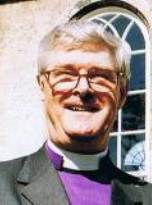 Rev Charles Robertson Minister |
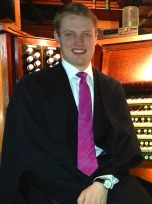 Mr Graham D. Maclagan Director of Music |
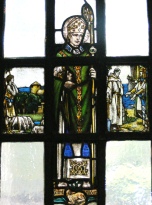 More About St Cuthbert's Church Edinburgh. . . |
On This Page :
Rev Peter Sutton, Parish Minister
Rev Charles Robertson, Minister
Mr Graham D. Maclagan, Director of Music
More About St Cuthbert's Church, Edinburgh . . .
Our Vision and Values
Our Place in the Community
The Historical St Cuthbert's
Links To
Pastoral Letter from the Minister
St Cuthbert's on facebook
Contact Details

Rev Peter Sutton, Parish Minister
In my early days, I lived in Fife. After school at Fettes College, I was commissioned into The Black Watch as an Infantry Officer. Whilst in the army, I studied Theology and Divinity at King's College, London and then at St Andrew's University. I served as a Platoon Commander in Berlin and Northern Ireland and then as an Operations Officer in Hong Kong where I was ordained an elder in the Regimental Kirk Session. After leaving the army, I was appointed Chaplain to Loretto (1994-1997). During this time, I studied at New College for a Master of Theology in Ministry. I then became Head of Religious Studies and Chaplain to The Perse School in Cambridge (1997-2000), and whilst there I was elected to the Fellowship of Trinity Hall. I spent the next eight years as Chaplain at Gordonstoun School. In 2008, I was appointed Headmaster of Ardvreck School, Crieff. |
|
| During my period of training for the ordained ministry of the Church of Scotland, I undertook placements at Stockbridge Church and Inverleith St Serf's before undertaking my probationary period at the Canongate Church. In the summer of 2016, I represented the Church of Scotland in South Africa at their probationers' conference and have recently returned from a study tour to the Holy Land. I have recently completed a Counselling Degree at Edinburgh University. I also work on a part time basis as Chaplain at Loretto. I am a keen skier and often look after the Church in Wengen and Zermatt in Switzerland when on holiday. I am married to Isabelle and we have five daughters. |
|
| Top |
Rev Charles Robertson, Minister
| |
Until November 2005, I was Minister of Canongate Kirk here in Edinburgh where I served for over twenty-seven years. Before that, I was for nearly fourteen years Minister of a parish near Dingwall in Ross-shire, the lovely parish of Kiltearn (Evanton). In 1965, I married Alison, who then taught geography in St Margaret's School, shortly before my ordination and induction to Kiltearn, where we had three children, all now very grown up. I am an extra Chaplain to Her Majesty the Queen, and also serve as Chaplain to the Merchant Company of Edinburgh. For many years I was involved in liturgical matters: I was a long-time member and then Chairman of the Joint Liturgical Group (a United Kingdom inter-Church committee); was Secretary of the committee which compiled The Church Hymnary: Fourth Edition; and, before that, for many years the Secretary and then Convener of the General Assembly's Panel on Worship. I also had the privilege of serving as a founder member of the Broadcasting Standards Council and as a member of the Historic Buildings Council of Historic Scotland. For more than twenty years, I was a Governor of St Columba's Hospice, and a member and then Chairman of Queensberry House Hospital. |
| My wife Alison, and I are both keen on classical music: she plays the violin in the New Edinburgh Orchestra, sings in St Cuthbert’s Church Choir, and enjoys playing the piano. She also founded and runs The Scottish Stained Glass Trust, a Registered Scottish Charity. You will see from all this that we have had and are still leading full and fulfilling lives. They are even more filled and fulfilling now that we have come to be associated with St Cuthbert's, and we are looking forward to getting to know as many of you as possible in the time we will be with you. |
|
| Top |
Mr Graham D. Maclagan, Director of Music
| |
I am Director of Music here at St Cuthbert's with responsibility for all aspects of the musical life of the church. I have been involved in the music here since November 2005 having begun my musical training in the Highland village of Kingussie, where I was appointed as Parish Organist and Choirmaster in 2000. Following secondary education, I read music at the University of Edinburgh, where my interest in choral and liturgical music grew; the history of music in Christian worship formed part of my honours degree. I graduated with the degree of Bachelor of Music with Honours in 2007, and went on to complete teacher training (PGDE) at the Moray House School of Education. |
Having taught in various schools in Edinburgh, Glasgow and Fife, I am now member of the Music Department at George Heriot's School here in Edinburgh. At Heriot's I teach music pupils of all ages from 3 to 18, and I have the opportunity to combine teaching with choir direction and playing the organ for school assemblies, services and concerts. I have accompanied the school's Chamber Choir in concerts here in Edinburgh in St Giles' Cathedral and the Usher Hall, and on their tours of the Northern English Cathedrals, the Scottish Highlands and Paris (including L'église de la Madeleine). A tour to Prague with performances in St Vitus' Cathedral is planned for October 2016. It is wonderful to be involved in the superb liturgy here in St Cuthbert's, and to be curator of the magnificent St Cuthbert's organ, one of the finest in Scotland. |
|
E-mail : Details of currently planned organ recitals HERE |
|
| Top |
More About St Cuthbert's Church, Edinburgh. . .
Our Vision and Values
Watch a short video reflecting on St Cuthbert and St Cuthbert's, by Rev
David Denniston.
(Originally produced as Day 33 of the Church of Scotland/Christian Aid Lent
Journey for 2016)
Our VisionOur core vision in St Cuthbert's is : Living out the Gospel of Jesus Christ at the heart of our city as God's people |
|
Our VisionOur core vision in St Cuthbert's is : Living out the Gospel of Jesus Christ at the heart of our city as God's people Our ValuesFaith : Our Christian faith is rooted in tradition, recognises our heritage, is alive in the present, and looks to the future |
|
| Top |
Our Place in the Community
The present Church building, lying below Edinburgh Castle and amidst the trees, was dedicated in 1894.
Our members come from all parts of the city, as well as the parish itself - which takes in the community from Princes Street to West Tollcross and High Riggs.
St Cuthbert's has a long tradition of caring involvement, with current examples being our active ministry among the business community - OASIS -and our working to help relieve HOMELESSNESS in the city.
A Parish Residents' Team is working to establish links with people who live in the area and we are ecumenically linked to our neighbour, St John's Scottish Episcopal Church.
The area is the hub of the international financial centre and a magnet for thousands in search of entertainment in cinema, theatre, pubs and clubs. Around two thousand people live within our parish (SEE MAP)and we play host to a steady procession of tourists from all over the world.
We serve a community on the move: a river of people swirling around the ancient rock on Edinburgh's skyline. As a Christian Church we are trying to learn how to ride the rapids of the Spirit and point to the Rock who is Jesus Christ. You'll find a bit of both on your visit."
| Top |
The Historical St Cuthbert's
The history of St Cuthbert's is fascinating. According to tradition, in the 7th century, St Cuthbert - the famous Northumbrian Saint - built the first church on the site, made of mud and wattle.
However, our first definite landmark is a Charter of King David I in 1127 which refers to 'The Church of St Cuthbert, hard by the Castle of Edinburgh.' This is the oldest manuscript in Register House, Edinburgh.
In many ways, St Cuthbert's can rightly be called the Mother Church of Edinburgh in that its parish once encompassed most of the present day city.
With a history spanning 1000 years and more, St Cuthbert's has been, in turn, Celtic, Roman, Episcopalian and Presbyterian. For the last 300 years it has been a congregation of the Church of Scotland and a member of the Presbyterian family of churches.
It is reckoned that over the centuries there have been at least seven church buildings on this hallowed spot below Edinburgh's Castle Rock. The church's close proximity to the Castle meant it was often caught in cannon crossfire between opposing armies and, as a result, sustained either severe damage or was destroyed. Such was the resilience of our forebears, however, that they immediately set about the daunting task of rebuilding.
The present church of 1894, built in an Italian Renaissance style, possesses a magnificent interior. It is unusually ornate and sumptuous for a Presbyterian church and is acclaimed for its beauty, atmosphere and sense of 'presence'. It is well worth a visit!
| Top |
Pastoral Letter from the Minister
Read the latest letter from the Minister HERE
| Top |
St Cuthbert's on facebook
Talk to us on facebook
|
| Top |
Contact Details
Our contact details are: The Parish Church of St Cuthbert Telephone : 0131-229 1142 E-mail the Church Office : A comprehensive list of all contact information, can be found HERE |
| Top |
For all Church or calendar related issues, please contact :
 |
St Cuthbert's Parish Church. 5 Lothian Road. Edinburgh. UK. EH1 2EP |
 St Cuthbert's Church |
soul space |
OASIS |
Pilgrim Way |

Podcasts / Recordings |
 YouTube videos |
 Church of Scotland blogs |
 St Cuthbert's Church |

|